

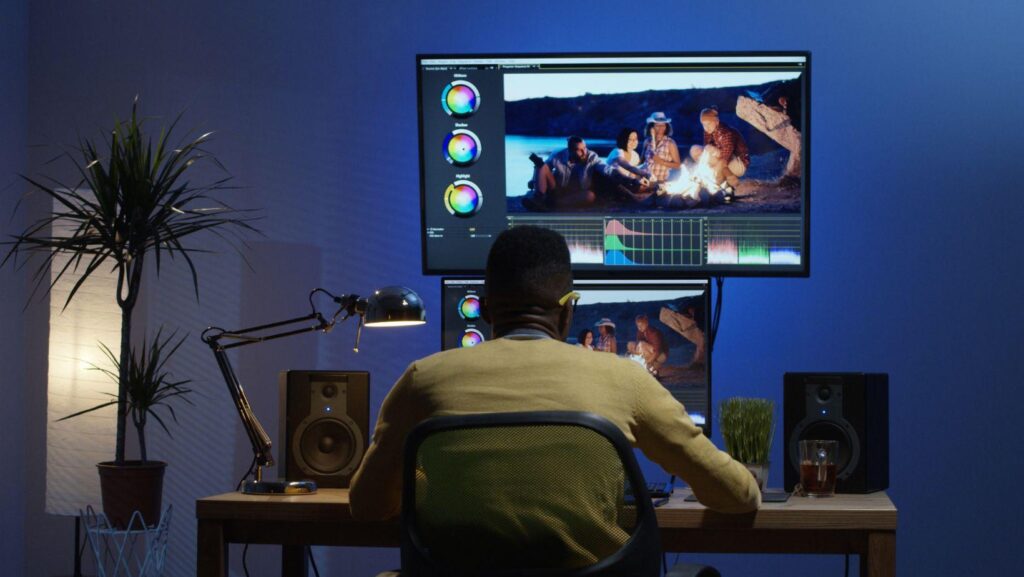
Video editing has traditionally required a surprising amount of manual work. Even a short social video can involve reviewing hours of footage, finding usable moments, trimming clips, arranging a sequence, writing captions, adjusting audio, and creating different versions for different platforms. The creative idea may take minutes to explain, but turning that idea into an organized timeline can take considerably longer.
AI is beginning to change that workflow. Instead of treating artificial intelligence simply as a generator of images or video, newer editing systems are using it as an assistant that can understand instructions, inspect source material, and help prepare an editable project.
This shift is particularly interesting when conversational AI is connected to a real video-editing environment. Recent developments show AI being used to control practical editing tasks through natural-language instructions rather than relying exclusively on menus, buttons, and timeline operations.
From Generating Video to Understanding Existing Footage
There is an important difference between generating a video from a prompt and editing footage that already exists.
Generative video tools typically start with an idea. A user describes a scene, visual style, or concept, and the system produces new material. Traditional editing starts at the opposite end: the footage already exists, and the challenge is deciding what should stay, what should be removed, and how everything should fit together.
AI-assisted editing sits somewhere between these two approaches.
A creator might upload several interviews, demonstrations, screen recordings, or travel clips and then describe the desired result in ordinary language. Instead of manually reviewing every file before opening the timeline, an AI-assisted workflow can help identify useful material and organize a preliminary sequence.
That makes AI less of a replacement for the editor and more of a production assistant.
Why Conversational Editing Matters
The appeal of conversational editing is simple: people often know what they want before they know how to execute it inside editing software.
Someone might say:
“Turn these clips into a 45-second vertical video, keep the strongest moments, remove long pauses, and make the opening more energetic.”
An experienced editor can translate that brief into dozens of individual actions. A newer creator, however, may understand the desired outcome without knowing which tools to use.
A conversational AI system can help bridge that gap.
For creators exploring an AI video editor with ChatGPT, the interesting development is not merely the ability to type instructions. The bigger advantage is connecting those instructions with an actual editing workflow, where the resulting draft can still be inspected and changed.
CapCut × Codex, for example, describes a workflow in which uploaded footage can be reviewed, useful moments selected, unnecessary sections removed, and clips arranged into an editable rough cut. The resulting project can then be refined inside CapCut rather than being treated as a finished, untouchable AI output.
The Rough Cut May Be the Most Valuable AI Contribution
People sometimes imagine AI video editing as a system that should produce a perfect finished video automatically. In practice, that may not be the most useful role for AI.
The rough cut is often where creators spend substantial amounts of time.
Before worrying about sophisticated transitions or visual effects, an editor has to answer basic questions:
These decisions can consume considerable time when working with large amounts of footage.
An AI-assisted workflow can help accelerate this preparation stage. Instead of beginning with an empty timeline, the creator can start with an organized first version and then concentrate on judgment, storytelling, pacing, and polish.
That distinction is important. A first draft does not have to be perfect to be valuable.
Better Instructions Produce Better Results
Conversational editing does not eliminate the need for creative direction. In fact, it makes clear communication more important.
A vague instruction such as “make this better” gives an AI system very little useful information. A more specific request might explain the intended audience, duration, platform, pacing, tone, and important moments.
For example:
“Create a 60-second educational video from these clips. Open with the most surprising statement, remove repeated explanations, keep the speaker’s strongest examples, add readable captions, and maintain a calm professional pace.”
This provides much more useful editorial context.
Creators can also work iteratively. They might begin with a rough instruction, review the result, and then request changes such as shortening the introduction, moving a particular clip earlier, or changing the emphasis of the ending.
That resembles the way a human editor and client might collaborate, except the first round of mechanical work can happen much faster.
AI Does Not Remove the Need for Human Judgment
There is a temptation to think that once an AI system can understand editing instructions, professional editors will no longer be necessary. That conclusion is premature.
Video editing is not only about identifying technically suitable clips. It involves context, emotion, timing, cultural awareness, brand considerations, and an understanding of what an audience is likely to find meaningful.
An AI system may identify a technically clean sentence, for example, while an editor recognizes that a slightly imperfect take feels more authentic.
The same applies to pacing. A system can shorten pauses, but a human may intentionally leave a pause because it creates tension or allows an important statement to land.
This is why editable AI workflows are particularly useful. They allow automation to handle repetitive work while leaving creative decisions in human hands. CapCut’s description of its Codex workflow similarly emphasizes that the resulting rough cut remains editable and that creators retain control over structure, timing, and the final result.
Where AI-Assisted Editing Can Save Time
The biggest opportunities are often found in repetitive production tasks.
Social media clips
Creators who regularly turn long videos into short-form content can spend significant time finding highlights and restructuring them for vertical formats. AI can help identify promising sections and prepare an initial sequence.
Interviews and podcasts
Long conversations contain plenty of material that never reaches the final edit. AI can help locate relevant passages, remove obvious repetition, and create a starting point for shorter cuts.
Educational content
Teachers, trainers, and businesses can use existing recordings to produce shorter lessons, explainers, or promotional snippets without rebuilding every video from scratch.
Marketing teams
A single piece of footage may need multiple versions for different platforms. AI assistance can reduce the repetitive work involved in preparing variations while editors remain responsible for brand consistency and final approval.
Beginners
Perhaps surprisingly, beginners may benefit the most. Traditional editing software can be intimidating because it exposes users to a large number of controls immediately. Conversational instructions provide a more approachable starting point.
The Importance of an Editable Result
One of the most important principles in AI-assisted creative software is reversibility.
If an AI system produces a single final video that cannot be easily changed, creators have limited control. If it produces an editable project, the situation is very different.
The creator can inspect the sequence, replace a clip, change the duration, rewrite captions, adjust audio, or completely restructure the story.
This also makes AI easier to trust. Instead of asking the system to make every creative decision, users can treat its output as a proposal.
That approach is becoming increasingly common across professional creative software. Recent updates to established editing applications have also introduced AI assistants capable of helping with project organization and repetitive production tasks while keeping editors involved in the underlying workflow.
What Creators Should Watch Out For
AI-assisted editing still has limitations.
The first is accuracy. Automated systems can misunderstand context, select an important clip incorrectly, or interpret an instruction differently from what the creator intended.
The second is consistency. Captions, visual choices, pacing, and automated edits should be reviewed before publishing, particularly for professional or commercial content.
There is also a privacy consideration. Creators should understand where uploaded media is processed and what permissions an AI-connected workflow requires before using confidential footage.
Finally, convenience can encourage over-editing. Just because AI can add effects, captions, cuts, and visual changes does not mean every video needs them. Good editing is often about knowing what to leave alone.
The Emerging Role of the AI Video Editor
The most useful way to think about AI video editing may be as a collaboration between human direction and machine-assisted execution.
The human provides the purpose: who the video is for, what it should communicate, which moments matter, and what emotional response it should create.
AI can help with the labor-intensive middle layer: reviewing material, organizing clips, preparing a rough structure, adapting content, and handling repetitive production tasks.
The final stage returns to the creator, who evaluates whether the result actually works.
That division of responsibility is more realistic than expecting an AI system to understand every creative decision automatically.
A New Starting Point for Video Creation
Video editing is moving toward a workflow where the timeline is no longer necessarily the first place a creator begins.
The process can start with a conversation.
A creator can describe the goal, provide the source material, receive a preliminary structure, and then move into a conventional editing environment to refine the details. For people producing content frequently, that can change the economics of editing: less time spent on mechanical preparation and more time available for storytelling.
The technology is still developing, but the direction is clear. AI video editing is becoming less about pressing a button to generate a finished clip and more about giving creators an intelligent assistant that can understand their footage and help turn an idea into an editable starting point.
That may ultimately be the most practical future of AI in video: not replacing the editor, but making the distance between an idea and a first cut much shorter.